Free · 12 checks · written by people selling a rural business themselves
The Algarve Rural Business Buyer's Checklist
Twelve concrete checks to run before you buy a rural tourism property, retreat venue or quinta in the Algarve: licensing, water, access, power, occupancy rules and the questions sellers hope you won't ask. The full checklist is on this page; leave your email and we will send it as a clean PDF you can print and take to viewings.
We are sellers, not brokers. We wrote this because it is the checklist we would want in our hands if the roles were reversed.
Get it as a PDF
One email with the checklist. Occasional follow-ups only if a property like ours is genuinely relevant to you. No list-selling, no newsletter fog.
Prefer not to use a form? Email us directly and we will send it.
The checklist itself
Twelve checks. Print it. Take it to every viewing.
Each item is phrased as what to verify and the exact question to ask. A seller who answers all twelve in writing is a seller you can work with.
1. Licensing path for accommodation
Confirm which licence fits your plan: alojamento local (AL) for the existing units or turismo rural for a larger operation, and whether the municipality (Câmara) will support it. Rules differ per parish and have tightened in recent years.
Ask: "Is there an existing AL or turismo rural registration, and can I have the licence number and documents?"
2. Water: source, rights and yield
In the inland Algarve, water is the asset. Establish the source type (borehole, well, spring), its registration and extraction licence, and a realistic dry-season yield. Unregistered water is a liability, not a feature.
Ask: "Show me the water source registration and licence, and the lowest it has ever run in August."
3. Legal status of every building
Portuguese rural properties often have structures that exist physically but not on paper. Cross-check the caderneta predial and certidão de teor against what you see, and ask specifically about every outbuilding.
Ask: "Which structures are on the caderneta, which have habitation licences, and which are unregistered?"
4. Zoning and what the PDM allows
The municipal master plan (PDM) decides what you may build, extend or convert. A "commercial shell" or "expansion potential" claim is only worth what the Câmara will actually approve. Get it in writing before pricing it in.
Ask: "What does the PDM classify this land and each building as, and has the Câmara commented on my intended use?"
5. Road access, all year, for your biggest vehicle
Walk the full access route and think in terms of your worst case: a removals truck, a supplier van, guests in a rental car at night in January rain, or a fire truck. Paved to the gate is worth real money.
Ask: "Is access paved to the gate, is any stretch a right-of-way over a neighbour, and can emergency vehicles reach the buildings?"
6. Power capacity, not just power
A business needs capacity headroom: three-phase supply, the contracted kVA, and the condition of the installation. Adding commercial kitchens, heat pumps, EV charging and event loads to a domestic supply means an expensive upgrade.
Ask: "Single or three-phase, what contracted capacity, and what has tripped in the last year?"
7. Occupancy and safety rules for paying guests
Licensed accommodation brings fire-safety, maximum-occupancy, pool-safety and accessibility obligations, each with fit-out costs. Price these into your model before you price the property.
Ask: "For my intended guest count, what fire-safety and pool-compliance work would the licence require here?"
8. Internet you can run a business on
Bookings, card payments and remote work all die without connectivity. Test on site with your own phone; check whether fibre reaches the gate; budget for Starlink as the reliable baseline in rural areas.
Ask: "What connection do you use daily, and can I see a live speed test?"
9. Sanitation: septic, soakaway, capacity
Rural properties run on septic systems sized for a family, not for ten guest units plus a retreat week. Establish the system type, its capacity, and what expansion would require.
Ask: "What sanitation system serves each building, what is it rated for, and when was it last emptied or inspected?"
10. True running costs and taxes
Get a full year of real numbers: IMI (property tax), water pumping and treatment, pool maintenance, garden and land upkeep, insurance, refuse, accountancy. Gross revenue projections mean nothing against unknown costs.
Ask: "Can I see twelve months of actual utility and maintenance costs?"
11. Insurance and liability for guests and events
Public liability for paying guests, and especially for events, pools and retreats, is its own policy class in Portugal, and some rural property types are harder or pricier to insure. Quote it before you buy, not after.
Ask: "What insurance do you carry today, and has any insurer ever declined or loaded a policy here?"
12. Seasonality: model the bad months first
The Algarve's coast hibernates in winter; the hills hibernate harder. Build your model from November to February first: if the business survives the quiet months on paper, the busy months are the bonus, not the plan.
Ask: "What happens here between November and February: bookings, costs, and your own routine?"
The meta-rule: any seller who will not answer these twelve in writing is telling you something. We answer all twelve about our own estate, many of them in our buyer facts, the rest in the buyer-facts brief on request.
Full disclosure
Yes, we are also selling one.
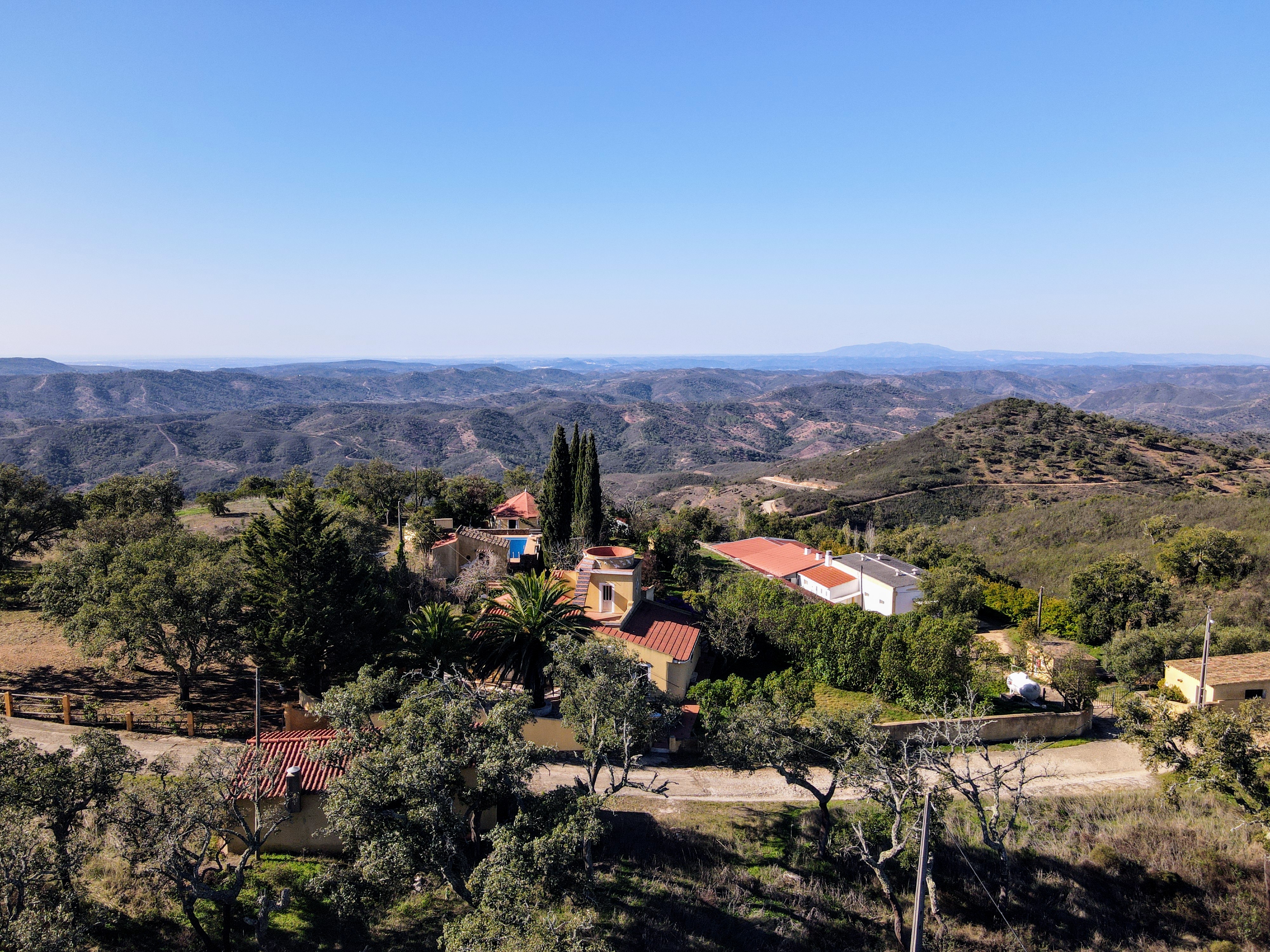
This checklist exists because we are selling Quinta Fonte do Palheiro, a 2.5-hectare estate with guest accommodation, its own water, a pool and a 500 m² commercial shell, under €900k. If it fits what you are looking for, wonderful. If not, take the checklist and buy the right thing elsewhere. That is what it is for.